Mbola tsy voadika amin'ity fiteny ity English
The First Session of the Firmest Handhold Series
An opening session on the foundation of Islam — the testimony that there is no god but God — delivered amid revolution, competing slogans and a public conversation that has lost its bearings. Its argu
Praise be to God, who has never ceased to be All-Knowing and All-Wise. May God bless Muhammad, whom his Lord sent to humankind as a bearer of good news and a warner, and grant him peace, and may He bless the family of Muhammad and his companions and grant them abundant peace;
To proceed: this is one of those exceptional, weighty lessons that touch a Muslim's very life and everything that will follow from it in the hereafter;
- The reason for this lesson is, of course:
the revolution and the events it has set in motion — the intellectual ferment and the fierce clash of opinion, especially among the elites and the loudspeakers of the media, over the sovereignty of peoples and the sovereignty of Islam and the right mechanisms for governing a Muslim society;
and where does religion stand on these events?
On that basis the brothers, may God reward them well, called on me to speak about the foundation of the religion of Islam
- about the testimony that there is no god but God -
The truth is that things have become badly tangled up in one another, and trials have surfaced in a great many areas — above all where the disagreement cuts against the very foundation of a Muslim's religion, as in the claim that the people are one hand and one body with no difference among them'!
that there is no distinction between a Muslim and an unbeliever, or any other creed, so long as the canopy of a single homeland shades us all;
This talk is false; there is plain confusion and deception in it, for the Muslim of sound belief has a way of his own, sent down from the Lord of the Worlds, unlike anyone else's.
So at this stage it has genuinely become necessary to write the Sacred Law down amid the trials, as the Prophet, God bless him and grant him peace, said:
"Islam will wear away as the embroidery of a garment wears away, until no one knows what fasting is, or prayer, or rites of sacrifice, or charity. The Book will be travelled over in a single night, and not one verse of it will be left on the earth."
Summary of the hadith scholar's ruling: its chain of transmission is strong
Narrator: Hudhayfah ibn al-Yaman | Hadith scholar: Ibn Hajar al-'Asqalani | Source: Fath al-Bari by Ibn Hajar | Page or number: 13/19
In the midst of these trials — in the midst of all this entanglement — ordinary people grow confused about their own religion, and so they are easily led into temptation and off the straight road;
That is why some of the people of knowledge, "some of the early generations," used to say: when trial falls, the one who worships God is set apart from the one who worships the false god"..
So ponder these words well, may God watch over you. That is why I felt that speaking about the foundation of the religion was a strong and worthy suggestion, and that it has become one of the pressing needs of our age, especially now that a clear split has opened between belonging to Islam and being loyal to its foundations and its way and disowning whatever contradicts it;
It has become a genuine necessity to study together the foundations that so many of us have lost sight of.
Come down to the ground of daily life and you find people who, if they hear someone insult the religion of God — God protect us — fall apart and blaze up; yet let one of the sanctities of Islam be violated and you may not hear the faintest objection;
But speak about extending the ruling of God, mighty and majestic, to everything — about the Law of God governing every fine point and every new matter, about the country being run by God's ruling and God's Law — and here comes the recoiling, the quarrel....
Then you will find an astonishing contradiction, and strange opinions and ideas pouring out of people!
For instance:
What is settled in Islam's ruling for the governed, and what is not? What does the sovereignty of Islam mean? Is there an alternative, or some gradual path to governance, or not? Is there a substitute for a certain period?!
And other such curiosities.
From another angle
in a study carried out by an American orientalist institution
specialising in evaluative studies of peoples: in a survey it conducted in 2013 covering Egypt, Iraq, Tunisia, Pakistan, Lebanon and Turkey, the institution recorded
"that only 18 percent hold the Sacred Law to be the single most important thing for the good of their country, and only 16 percent hold that establishing the Law is the most important means of lifting their countries out of their backwardness. Against that, close to 80 percent chose a democratic government! ..
These people we live among — when you ask them:
Are you a Muslim or not?!
Or are you a patriot?
he tells you: I am a Muslim before I am a patriot, I am a Muslim, and I am fiercely protective of Islam,
But ask him whether he minds the Sacred Law entering into every part of his life, and then he starts arguing with you,
That, sadly, is what happens...
These people fit the saying of the French historian who specialised in church history — though I would rather not cite the words of
orientalists, wisdom is the believer's lost property, and wherever he finds it he has the better claim to it;
Describing certain French people whom globalisation had overtaken while they still felt a loyalty to their church, he called it "belief without belonging"!! And that really is a description of our own reality;
For if someone speaks ill of the Messenger of God ﷺ you will find him bristling; but tell him that we are going to put some of the Sunnah into practice and he will argue with you! So there has come to be belief without belonging ..
A condition like this demands that the question of God's oneness be settled once and for all
the question of the foundation of the religion, the question of "there is no god but God," which is the general frame within which a person becomes a Muslim..
This question has to be settled, especially in circumstances like these ..
A survey was taken in Tunisia, and the question was: are you Tunisian, or a Muslim before you are Tunisian?
The answer was that nearly 59% of the Tunisian people said they were Muslim before they were Tunisian..
Yet talk to them about the Sacred Law and about ruling by it and you will find something close to rejection — of the Law and of governing by it — and a great appetite for the democratic process, which in their view is the more reliable and the safer alternative to ruling by the Law! This is what is called "belief without belonging"
So I wanted to speak, in deference to this brother's wish,
and in truth it is my own wish as well, because in times like these the matter has to be settled,
and this decisive word has to be spoken on the question of the foundation of the religion of Islam and of the frame within which a person becomes a Muslim — for once he steps outside "there is no god but God" he is no longer a Muslim. The foundation of the religion of Islam is the firmest handhold..
.......
-It is related in the authentic collections that 'Abd Allah ibn Salam, may God be pleased with him, dreamt that he was climbing a pillar and then took hold of a ring at the top of it. He asked the Prophet, God bless him and grant him peace, about the vision, and he said to him: the pillar is Islam, the ring is the firmest handhold, and you will die upon Islam..
So the Prophet's own reading, God bless him and grant him peace, is that the head of Islam is the firmest handhold.
And the firmest handhold is the title of this series, if God, mighty and majestic, wills..
It is the general frame of who you are as a Muslim; that is, it has to be the head of the whole matter. And the firmest handhold is: there is no god but God..
God, mighty and majestic, says: ﴿ Or were you witnesses when death came to Jacob, when he said to his sons, 'What will you worship after me?' They said, 'We will worship your God and the God of your fathers, Abraham and Ishmael and Isaac — one God; and to Him we submit.'﴾
Anyone who reflects on this passage, brothers, will be utterly astonished. For Jacob, peace be upon him, is a prophet of God
and the son of Isaac, peace be upon him,
who is a prophet of God and the son of Abraham, peace be upon him,
who is a prophet of God
and the father of the prophets, the imam of pure monotheism, whose sons were prophets; and these are people at the very summit of religion, at the summit of commitment, at the summit of holding fast to Islam,
And here is the point:
Jacob, peace be upon him, says to them as he lies dying: what will you worship after me?!!
Have you reflected on this? Whoever does not feel the trials and how severe they are will, in truth, fall into them..
Hudhayfah ibn al-Yaman, may God be pleased with him, said that people used to ask the Messenger of God about good, while he would ask him about evil, for fear that it might overtake him and he would fall into it..
So it is: a person must know evil — not to take any pleasure in it, God forbid, but to know it so that he may avoid it..
As the poet said:
I came to know evil, not for evil's sake but to guard against it; and whoever cannot tell good from evil falls into it..
That was the opening of this series, "The Firmest Handhold." It is "there is no god but God," it is the head of the religion and the head of the whole matter, and I will explain to you, if God, mighty and majestic, wills, what it means and what its conditions are, God willing, at our next meeting..
I ask God, mighty and majestic, to make me and you among those who hasten when they are called, who stop when they are forbidden, who take their final resting place to heart and are thereby guided to Him..
I say what I have said, and I ask God the Almighty to forgive me and you. May God bless our master Muhammad and grant him peace, and praise be to God, Lord of the Worlds..
And peace be upon you, and the mercy of God
Transcription, lightly edited
Ahoana ny hevitrao momba azy?
Ny mpamaky amin’ny fiteny rehetra amin’ity lahatsoratra ity dia miara-maneho fihetseham-po eto.
Momba ny mpanoratra
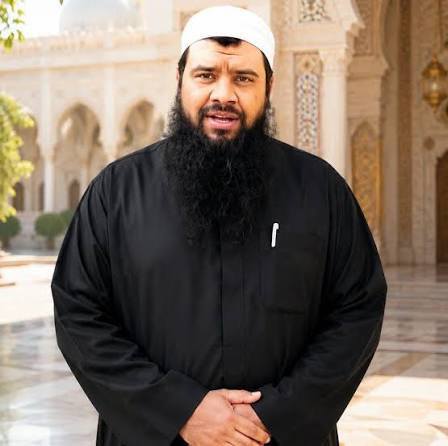
Ny Sheikh Samir Mustafa dia ilay mpitory silamo Ejiptiana Abu Abd al-Rahman Samir ibn Mustafa al-Suyuti. Teraka tao amin'ny governoran'i Asyut izy tamin'ny 1976 ary lehibe sy nandany ny ankamaroan'ny fiainany tao an-tanànan'i Helwan ao amin'ny governoran'i Kairo. Fampianarana sy fikatsahana ny fahalalana Fivavahana: Nanolo-tena hitady fahalalana ara-pivavahana izy hatramin'ny fahatanorany ary nianatra tamin'ny tanan'ireo sheika sy manam-pahaizana malaza maro tany Ejipta. Ny mpampianatra malaza indrindra: Nianatra teo ambany Sheikh Hasan Abu al-Ashbal al-Zuhayri, Sheikh Abu Ishaq al-Huwayni, ary Sheikh Muhammad Abd al-Maqsud izy, ary mpiara-miasa akaiky sy maharitra amin'i Sheikh Muhammad Hussein Yaqoub. Fitoriana sy famelabelarana momba ny asa fitoriana: Fantatra tamin'ny fomba fitenenana nahavariana azy izay niresaka mivantana tamin'ny tanora izy, ary nitory toriteny sy lesona an-jatony tao amin'ny moske ao Kairo sy Giza ary tany amin'ireo governora Ejiptiana maro hafa. Fitiavan'ny manam-pahaizana: Nifantoka tamin'ny fananganana finoana marina, ny fampianarana momba ny fiainan'ny Mpaminany sy ny tantaran'ny Silamo ary ny fanabeazana ny fanahy izy. Tantara sy soratra lehibe: Namokatra andian-dahatsoratra sy lesona nalaina malaza maro izy, anisan'izany ny andiany "The Great Battles of Islam", "Commentary on the Short Suras", ary "Story of the Prophets", ankoatry ny fanaraha-maso asa sy bokikely maromaro momba ny fanapariahana ny finoana silamo. Fitsaram-ponja: Nitsahatra ny asa fitoriana ampahibemaso nataony taorian'ny nisamborana azy tamin'ny taona 2017 raha nandeha nanao dia mba hanatanteraka ny fombafomba amin'ny Omrah, ary mbola any am-ponja izy hatramin'izay.
Fanohanana
Ampio handoa ny dikanteny manaraka
Maimaim-poana ny mamaky ny Turjuman amin’ny fiteny rehetra amoahany azy, ary tsy mitondra dokambarotra izy. Ny dikanteny no ampahany mandany vola. Raha nendrika ny fotoanao ity soratra ity, dia afaka mandefa zavatra ho an’ny manaraka ianao.

USDT · Tron (TRC20)
TCxC8zmmK9fqDy7B4FbeNs2hXJkfMQ6vjc
Alefaso ihany ny vola voatonona eto, amin’ny tambajotra voatonona eto. Ny vola nalefa tamin’ny tambajotra diso dia tsy azon’olona averina intsony.
Resaka
Resaka iray ihany no mizotra eo ambanin’ny fiteny rehetra amin’ity lahatsoratra ity. Na izay namaky azy tamin’ny Malagasy, na izay namaky azy tamin’ny fiteny hafa, dia samy miresaka eto avokoa.
Mila kaonty ianao vao afaka miditra amin’ny resaka. Adiresy mailaka sy teny miafina ihany no ilaina, tsy misy hafa.
Mbola tsy nisy niteny na inona na inona. Mety ho ianao no voalohany.